“Chief”

Ky Laffoon was a fascinating, colorful character and one of the most unique individuals ever to play on the pro golf tour of the 1930s and 1940s. When he burst upon the national scene by winning the Nebraska Open in 1933, the press corps was left scrambling to fill their columns with information about this rough-hewn and deeply tanned mystery man. A reporter – it is said to have been a young newspaperman in Boston in 1934 – made an association with Laffoon’s high cheekbones and Oklahoma address, and concluded that Laffoon was Native American. Ky was quoted as saying, “He asked me if I was an Indian and I said ‘hell, yes, full-blooded Cherokee.’”
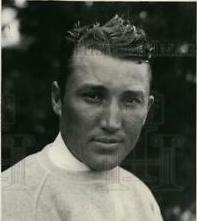
Ky Laffoon

Like other publicity-seekers on the nascent pro tour such as Gene Sarazen and Sam Snead, Laffoon figured if he got a lot of “print” he could get a good job. So, he played along, inventing a Cherokee background and soon became known as “Chief”. The name stuck and for years the press ran endless stories of how remarkable it was to have a Native American in the golf pro ranks. Laffoon even took to wearing a feather war bonnet – a traditional Native American headdress – to keep the ruse going.

A quick check into his background, however, would have revealed that Laffoon was actually born of French, English and Irish ancestry in the town of Zinc, Arkansas. And, as his name suggests, his parents were actually Belgian immigrants. Shortly after his birth on December 23, 1908, the family moved to Oklahoma where young Ky spent much of his formative years, but certainly not on a reservation.

My father and Ky Laffoon first met as teenagers in the fall of 1927 while playing golf in and around Oklahoma City. Over the next twenty years or so, the two pros would share many good times together both on and off the golf course. As a kid, I remember my father telling me stories about his travels with Ky Laffoon. I am pleased to report that many of those fascinating anecdotes are included in my book, “Jack Grout, A Legacy in Golf.” Also, while doing research for the book, I learned from Laffoon’s great grand-nephew, Ronald Ky Laffoon Jr., that the name “Ky” was actually derived from the abbreviation for the state of Kentucky.

I learned from my father that Ky Laffoon was an intense man with quite a raging temper on and sometimes off the course. His golf game was chock full of bulldog courage and side bets. He was a contemporary survivalist who loved to hunt, fish, drink, eat, smoke and chew tobacco, play cards, enjoy his dogs and his friends.

Dad also shared with me that Laffoon fancied himself a ladies man. With his noble nose, sturdy chin, and high cheekbones, Laffoon was a curiously handsome fellow. He had raven-black hair smacked flat with pomade and parted down the middle. When he was getting dressed he’d preen in front of the mirror, slick his hair back and say, “Boy, you’re the best looking man around. I don’t know how the women can stand it!”

In Laffoon’s car besides several pistols, he kept his clubs, shoes and socks, plus bottles of Scotch, chewing tobacco products and cans of sardines. In the trunk there were changes of clothing, a shotgun with boxes of shells, old newspapers, practically everything necessary to take care of whatever scrapes he might get himself into. Laffoon said, “You never know when you’re going to get into a fight with the old lady so you’ve got to be prepared.”

Ky met his “old lady” Irene in 1935 while he worked at Northmoor Country Club in suburban Chicago. Irene was described as an attractive woman, small and blonde. She grew up in the town of Bartlett which is about 30 miles southwest of Chicago. Soon after their wedding, Laffoon became partners with his brother-in-law in a chicken farm that the family operated. That collaboration provided a decent income for Laffoon and his wife who continued traveling together on the tour for many years.

Perhaps as a reaction to his having little or no money as a child and his scruffy years as a caddie, Ky overdressed when he made it on tour. A forerunner to Doug Sanders, and Ian Poulter today, Laffoon was infamous for his colorful outfits, with canary yellow slacks and matching shoes being a particular favorite. He was also known for his explosive outbursts. A botched shot or a flubbed putt might result in a flying or broken club as well as a few tirades aimed at himself, his equipment, sand traps, high grass, the weather and anything else handy.

“I was easily upset,” he said. “The first year I won the long-driving contest in Hot Springs, Arkansas, I probably would have won the tournament, too, but I ran out of clubs. I had all my clubs up in the trees. I got mad and threw one club up in the tree and it didn’t come down. So I threw another up to get it. That stayed. I’m really mad so I throw another. Laffoon added, “Now I’ve got three clubs up that damn tree, and I don’t have over three clubs left. How you gonna win a tournament with just three clubs? I finally got a little kid to go back out there, climb the tree and get them down. It rained and those hickory shafts all had warped.”

As might be expected with such a larger-than-life character, Laffoon could be charming and funny. He could keep groups of golfers captivated and laughing with his stories of the early day tour and many would seek him out for swing tips and to revel in his company.

Sadly, in 1982 Ky was diagnosed with inoperable stomach cancer. And, on March 17, 1984 when his strong and proud body no longer was his, he made a final visit to the armory in his car truck. He was later found dead in his home having shot himself.

In all, Laffoon won 10 PGA Tour titles; five of those came in a magical 12-month stretch from 1933-1934 and, he had 8 top-10 finishes in golf’s major championships. He also represented the U.S. on the 1935 Ryder Cup team. While his tale is truly one of unfulfilled potential and ultimately tragedy, it is also that of a unique character and a hugely popular man who brought fun and humor into a game that can at times be all too serious.

Passing The Torch

Round 1 of the 2013 PGA Championship will commence tomorrow morning (8/8/13 at 7:10 am) at the Oak Hill Country Club in Pittsford, New York, a suburb southeast of Rochester. Oak Hill has a rich history of golf. In fact, it’s the only club in the United States to have hosted all six of the men’s major championships.

In an interview that appeared a number of years ago in the Ohio Golfer Magazine, Jack Grout told Columbus (OH) sportswriter Paul Hornung, “The last tournament I played was the U.S. Open at Oak Hill in Rochester, New York. It was the year before Jackie (Nicklaus) played in his first Open up at Inverness in Toledo.” To be precise, on June 4, 1956 my Dad (at the age of 46) shot a 36-hole score of 145 and earned his playing credentials into the United States Open Championship (scheduled June 14-16) for his sixth and final time.

His two rounds in the qualifier that day at Clovernook Country Club in Cincinnati were 75-70-145. At the time, the golf course at Clovernook played as a par 72. My father’s 70 in the second round was one of only five sub-par rounds. At day’s end, three players were forced to go extra holes for the final two qualifying spots. The playoff involved my father plus accomplished Walker Cup amateur Dale Morey of Indianapolis and Richmond, IN professional Sam Drake. On the third extra hole, Morey was eliminated when he made a bogey five while the others got their pars.

At the time, the most notable name in the qualifier that day was Gay Brewer Jr., who went on to win the Masters in 1967. He shared medalist honors with a total of 144. In those days, Brewer was an assistant golf professional at Cincinnati Country Club. Other contestants in the talented field included William Campbell of Huntington, WV; Donald D. Shock (my old boss from my days as the assistant professional at Columbus Country Club), who shot 73-74-147; heralded course architect Pete Dye, with scores of 77-75-152 and, my father’s sixteen year-old protégé Jackie Nicklaus. With rounds of 75-76-151, young Nicklaus finished in a tie for seventeen.

However, just one year later, the torch would be passed from teacher to student. On June 3, 1957 at Kenwood Country Club in Cincinnati OH, while Dad shot rounds of 74-74-148 and just missed qualifying, the young phenom Nicklaus fired 68-71-139 and gained admittance into the first of his total of forty-four U.S. Open Championships.

For the record, during his playing career, Jack Grout participated in 6 U.S. Open’s: 1934 at Merion Golf Club; 1935 at Oakmont Country Club; 1940 & 1946 at Canterbury Country Club; 1947 at St. Louis Country Club, where he finished fifty-first (tie); and, 1956 at Oak Hill Country Club. If, you were to add Grout’s total of six to Nicklaus’ total of forty-four then, respected teacher and renowned student’s grand total would equal an extraordinary 50 appearances in our country’s national championship.

Finally, some real trivia: If you’d allow me (your not-so-humble blogster) to kick-in my one-time shot in 1979 at Inverness Golf Club in Toledo, that would make it 51! Oh boy.

The House That Built Jack

“If Jack Grout had not arrived as the new pro at Scioto concurrent with my father’s convalescence, right now I would probably be selling insurance Monday through Friday and flipping a fishing rod for my weekend fun. Conceivably, I would have continued to play golf, or come back to it in later years. But I am certain that my life overall would have been very different from what it became.”

On page 46 of Jack Nicklaus’ autobiography “My Story,” Nicklaus continued with, “If my dad (Charlie Nicklaus) was first the catalyst then the architect of my golfing career, Jack Grout was its principal builder and supreme motivator.”

Yes, as many of you know, Jack Grout was the man who built the powerful, fairway-eating swing of Jack Nicklaus, golf’s all-time leading major-championship winner. Despite all the recognition and great compliments my father received for his many notable achievements, he remained through it all a humble, loving and caring husband and father.

Of course, it was in the house that built Jack where my brother, two sisters and I lived with our dear mother and father. Our life together was happy and relatively uncomplicated, with the focus on home, school and friends. There were bumps and detours along the way, of course, but it was a generally healthy and satisfying life for the whole group.

When Dad came home after work, he usually was tired and just wanted to relax. Any conversation there was around the dinner table always seemed to center on family matters. And, as I remember, the chatter rarely included much at all about Dad’s day at the golf course: Or how Jack Nicklaus or any other golf pro in Dad’s group of players was doing in some tournament somewhere.

Furthermore, as years passed, that same sort of quiet, family, lifestyle pattern remained rather consistent: Even while Dad’s reputation as a golf instructor intensified, which brought to his lesson tee successful players such as Raymond Floyd, Ben Crenshaw and Lanny Wadkins. He still had the ability to leave behind what had happened that day at the golf course and, like clockwork, shift comfortably into his other world as a family man.

While growing up, my three siblings and I were certainly aware of our Dad’s prominence in the game. But, at the same time, when Nicklaus or another one of Dad’s students was leading a tournament or had won some major championship, we didn’t jump around and make a big deal over it simply because Dad didn’t either. It just wasn’t in my father’s nature to act like that.

Is it possible to imagine any golf instructor today, not allowing himself to get caught up in the high-life and hoopla (like flashy displays of mugging and hugging their player after he walks off the 18th green) that now comes standard with the success of one of his students? Especially the type of fanfare and praise that would result when his student just happened to be the most accomplished player on the planet? Well, it’s obvious that Jack Grout did not concern himself with such things. He would have considered those actions as being pretentious and phony.

As a family, we all took our lead from Dad and as far as he was concerned, one’s personal accomplishments were always kept in perspective. In retrospect, perhaps our family should have made more out of his successes than we did. After all, they were honest-to-goodness significant moments in sports. Golfing history was being made over and over by players who sought him out for his advice and counsel.

Maybe, Mom and we kids would have behaved differently and gotten the big head, so to speak, if all of this had been happening in the contemporary cable TV age, when Dad’s work with Nicklaus and the others would be the subject of a reality show or continuing reports on ESPN or the Golf Channel.

But, I can tell you that all the fanfare and sensationalism that always seems to accompany present-day news reporting would not have changed Jack Grout one bit. He would have continued being happy and content to just remain in the background and let his golf students take full credit for their successes both on and off the course.

The Rationale for “Hands”

Once you can apply the fundamentals of proper set-up, grip, steady head, footwork and full extension, the only essential remaining between you and a skilled overall golf swing is the effective movement of the arms, hands and wrists. Of course, herein lays one of golf’s greatest debates: Should the golf club be motivated by hand action or body action?

With regard to Jack Nicklaus: At an early age, he was taught to have “quiet hands” or passive hands and, to swing the club by using all of his physical self. Even as an adult, his hands and wrists have been relatively weak. However, he was blessed with massive thighs and calves. So, throughout his illustrious career he has used the incredible strength in his lower body to great effect in his golf swing. Conversely, had Nicklaus been born with more natural arm strength and a stronger pair of hands and wrists, a solid argument could be made for him having an altogether different swing than it was.

My own teaching experience lets me know that many golfers, who seem to have acquired some golf knowledge by reading instructional books/magazines and/or studying swing-sequence photos of PGA Tour players, tend to buy into body action at the expense of arm, hand and wrist action. I blame this de-emphasis of the use of the hands in golf on two factors. First, today’s playing professionals who discuss and write about their games nearly all emphasize “big muscle” body action because their arms, hands and wrists are trained to work automatically. Second, the stop-action cameras depiction of the pro player being able to maintain his wrist cock/hinge on the forward swing makes it look like the hands and wrists are being deliberately held back during the downswing.

It’s my belief these two factors cause a lot of everyday golfers to try to take their hands and wrists out of the swing entirely. Instead of allowing them to consider a “late release” position as a determinant, I teach and encourage them to regard it as a result/effect of proper swing technique. To affect a cure, I’ll accentuate the fundamental of proper footwork – a lateral shifting of weight from the inside of the right foot to the inside of the left foot. Plus, I’ll put an accent on a free swing of the arms and hands through the ball. Or, in many cases, I’ll emphasize a feeling by the pupil that he’s throwing or slinging the club head into the ball from the top.

In my view, as taught to me by my father, it is impossible to “release” the club head too early with the hands, wrists and arms on the downswing so long as the lower body i.e., feet, ankles, legs and hips have worked ahead of them and, the entire left side (target side) of the body is steadily moving into a balanced and finished position.

In any case, whether you consider the hands as active “hitters” or instead as passive “reactors,” it’s essential that they be strong to play your best golf. Increasing the strength in all the little muscles in the hands, thumbs and forearms allows you to hold the golf club with less exertion which leads to more club head speed and better control of the golf club.

• Distance: A proper grip is the most important fundamental in golf. Having a stronger (as opposed to a weaker) grip is the key to achieving greater club speed and distance.

• Control: Your grip is your primary control of the club face. It should be constant and fitted to the shaft of the club.

• Strength: Strong hands, wrists, and forearms are crucial for stability and accuracy. Strong hands are the key to maintaining a soft, relaxed grip and smooth swing. A tight grip on the club will only lock the wrists and prevent natural movement in your swing.

Golf is a game of fingers and hands working in coordination with other parts of the body. Proper usage of the hands plus good balance and a swing of the clubhead in a wide free arc will take care of all the so-called positional basics.

The best swing in the world is only as effective as the strength of the fingers to hang onto the club at impact. If your hands are weak, the shock of impact will move them on the club. Exercise your hands, over-train them – they can’t be too strong.

The hands must hit past the body, not with the body. To achieve that, I teach hitting with the right hand past the left, making the clubhead do the work. Through impact the left forearm and hand gradually turn down and over as the right hand hits past it. The action is a rolling or turning of the hands and arms, not an inward collapsing of the left wrist or a forward bending of the right wrist.

A grip in which the back of the left hand faces the target at address allows that hand to turn more freely through the ball at impact while allowing the right hand to supply the power.

Think of the palm of the right hand as being an extension of the clubface. It will naturally come from any backswing position to hit the ball squarely if it is properly trained and you will allow it to do so.

Most golfers’ hands instinctively return to the same alignment at impact that they were in at address. If the back of the left hand and the palm of the right hand parallel the clubface at address, then they’ll do so at impact if they are properly trained and if you swing freely without manipulating the club.

I like to feel that I hit the ball hard, but that the hit is concealed as much as possible. To me that spells efficiency; which comes from proper technique including having trained hands. Trained hands allow me to achieve maximum clubhead speed just before impact by whipping the clubhead through the ball at the last split second. This is certainly a “late hit” – however, it is a very definite hit with the hands and the clubhead.

Consciously “hitting late” is the worst mistake in golf for the average golfer. Most of the slices you see come from not using the right hand to fire/whip/sling the clubhead through the ball, which forces the golfer to hit with his shoulders. You can’t hit too early with a trained right hand if your right arm stays bent until impact.

Taking Lessons

As golfers, we may think that we understand the swing. There may even be times when we feel that we are swinging correctly. However, because that little white ball seems to have such a short attention span and because we can’t readily see ourselves swing, we occasionally require a professional observer to check us out, to note any mistakes and, to put us back on the right track.

Also, while an instructional book and/or video can impart considerable golfing knowledge, neither of these means of communication can tailor specific fundamentals to the fine degree needed for you to become the best golfer you can be. To approach that level of skill, you’ll need personal attention from a teacher who can deal with your own personal physical and mental quirks.

How to Take a Golf Lesson:

 1. Arrive on time. Better yet, be early.

Arrive early enough to warm up, relax and clear your head.

Golf is recreation, and a golf lesson should be fun. Take the time to swing the club for 10 or 15 minutes, to loosen up and calm down.

2. Don’t tell the instructor what’s wrong with your swing. A good instructor will understand what’s going on with your swing after you’ve hit three balls. More useful for the instructor at the beginning of the lesson would be a brief description of your typical game.

3. Be a good listener. Good teachers will take-in everything you’ve said and develop a plan for helping you. But you have to hear the message, understand the solution and understand why it will work.

4. Remain open to new ideas.

The teacher might change your grip, and yes, it won’t feel normal. But, I tell my students the reasons why a new grip might help. And, I ask them to trust me for three or five swings. Give it a try with an open mind.

5. Maintain an honest relationship with your teacher.

How much time do you have to practice? If the answer is never, the instructor may give you some drills you can do in front of a mirror at home or during a break at work.

6. Do your homework before selecting a teacher.

Find out a little about your instructor and his teaching methods and consider whether it would be a good fit for you. You do need a rapport with your teacher.

“What To Look For In A Teacher” by Jack Nicklaus * Golf My Way – Reflections and Recommendations :

“When praised as an instructor, Jack Grout, among the most modest of men, would often respond that he was just lucky to be in the right place at the right time to have a student like Jack Nicklaus come along. Well, Jack Nicklaus was equally lucky to be in the right place at the right time to have a coach – and friend, and, ultimately, “second father” – like Jack Grout.

A lot of pros can teach golf’s fundamentals effectively, because the reality is that there aren’t that many of them, and they haven’t changed all that much in the last hundred or so years.

What has always stood out to me most about Jack (Grout), far beyond his teaching and tuning in the mechanics of the game, was the degree of interest he took in me as a person. This came through in the immense amount of time and energy he devoted so gladly to me over so many years, along with his understanding and tolerance of my bouts of impatience and frustration.

Most of all, it came through in his unrelenting and upbeat encouragement. Over the years, there were times when Jack Grout believed in me more than I believed in myself.

A coach can bestow no greater gift.”

7. Finally, set reachable goals, because one lesson isn’t meant to overhaul your game.

People sometimes expect miracles. Successful teaching is done in small pieces that add up a lot.

Remember: A good golf lesson is worth 1,000 range balls. With a little forethought, you might make it worth even more.

A Secret Fundamental to Golfing Success

The answer to the title is hardly sexy or exciting, but it is the basis for the success that Jack Nicklaus derived at golf. It is often seriously overlooked in our race to succeed. What is it? In order to excel at golf (or most anything for that matter), you must master the fundamentals. So often in our modern world, we want things so quickly that we overlook some of the most important issues. You can only build a skyscraper as tall as you have a base to support it. Building a golf game that will endure and prosper is no different. In golf, there are a mere handful of basic fundamentals that even many professional golfers gloss over – to their detriment.

They include:  Proper Grip – helps deliver the clubface square to the target at impact: Correct Set Up – aim, alignment + 3 “P’s,” i.e., positioning & placement of the feet and posture: Steady Head – the hub of the swing, the axis of the club’s rotation around the body: Proper Footwork – playing from the “insides” of the feet promotes balance: Full Extension – developing a wide arc generates clubhead speed: “Quiet” Hands – are not active “hitters,” instead they are passive “reactors.”

Most golfers and even some professionals quickly rush past the fundamentals in a hurry to get into something more exciting, like actually hitting the golf ball. Jack Nicklaus realized it and shared this with me. He felt that his attention to the fundamental details was the key differentiation point that few of his contemporaries paid adequate attention to. Whether or not this is accurate hardly matters, but in Nicklaus’ mind, those he had to play against were ill prepared.

He and his coach Jack Grout would annually start every year with an entire day reviewing the fundamentals of the game. The discussion sounded like “Jack, this is a golf club and here is how you hold it.” Over the course of each year, subtle changes might take place and ever the attention to detail, Nicklaus wanted Mr. Grout to review everything in detail. He knew that virtually no one else playing professional golf would do this, but this was part of his process that he felt was critical and made him so tough to beat. Knowing he had this infallible process with every detail attended made him feel entitled to win. How many of his fellow players felt entitled?

Jack Nicklaus was building a basis that was so strong in theory and practice that it would not and could not be shaken under any circumstances. This is not my belief, it was his. Some may call this “mental toughness,” but this was simply the result of paying attention to mastering one tiny detail at a time – something virtually anyone can do, but don’t. With patience, Nicklaus knew he was going to be better prepared than anyone else. It was his “knowing” more than anything else that provided him with his edge. He knew that too.

Vince Lombardi would begin every football season with the Green Bay Packers holding a football and teaching his players, “Gentleman, this is a football.” The discussions proceeded with every fundamental detail relevant to the game, but ones his players felt they knew in their sleep. They soon realized that they were better prepared than anyone else to win.

Boston Celtics great Sam Jones shared with me that Red Auerbach only employed five plays during his entire tenure coaching professional sport’s great dynasty. He went on to reveal that the team never scouted their opponents nor did they care how their opponents would play them. All they were concerned about was executing five fundamental plays to perfection, and not dozens. Auerbach treated everyone on those great Celtic teams as apprentices no matter their experience or World Championships.

There is a saying in the martial arts: Do not fear the man who knows 10,000 punches, but do fear the man who has practiced one punch a thousand times for he is far more dangerous. Jack Nicklaus, the Green Bay Packers, and the Boston Celtics did likewise. Can you name anyone better? Their focus upon the fundamentals seemed mundane and boring, but it worked better than any other’s strategies or sophistication. The late Bruce Lee took down many accomplished martial artists in seconds who knew thousands of techniques simply because he mastered the fundamentals of just two or three.

In golf, your swing, hit, and result can only be the product or result of the way you hold the club, the aim and position of your setup, and the manner in which you begin your swing. When you realize that everything after that can only be a result, you simplify what can otherwise be a very complicated move. And when you master these or other very small fundamentals, you can prevail under any competitive circumstances.

The following is a true story. There was an American martial artist who had long studied his craft and brought over a world Master to live with him and to instruct him. He fancied himself on his victories, knowledge, and prowess. He was anxious to impress the Master and wanted the Master to teach him all the intricacies of the art. The Master showed no interest and this frustrated the expert. Finally the Master agreed to observe the expert, but the master only wanted to see him throw a punch. Throwing a punch was easy, child’s play. The Master asked the expert to deliver a punch to within an inch of a burning candle. The expert thought that not too difficult, but he prepares and then delivered a powerful blow perfectly as instructed. He was quite proud of himself. Then the Master offered to show the expert how he (the master) could throw a punch. With hardly a windup, the little old Master threw a punch that stopped a full 18″ from the candle, but had such force that it snuffed out the candle’s flame. In other words, the short punch from this slight little man would blast any man across a room with incredible force. The expert all of a sudden realized that he knew nothing of his craft and would then shift his attention back to the fundamentals of learning to master just one punch and give up anything else from that day on.

Jack Nicklaus was golf’s version of the apprentice learning from the Master (Jack Grout) and then mastering the fundamentals. In the viewpoint of Nicklaus, many of today’s players have taken short cuts and their fundamentals are neither sound nor engrained. He laments that these professionals don’t have the skills or preparation, or the knowing from mastering the fundamentals to win on a consistent basis – to close out a golf tournament. Might you be one who could benefit from mastering or revisiting a very few basic fundamentals?

And can you begin to appreciate how this lesson might impact everything in your life?

Note: The bulk of this fine article was written by Bob Fagan: Author, Coach and Consultant. I made a few spelling corrections and several additional changes that I knew to be correct and helpful to the overall message.

Why Do You Play Golf?

Though my father was known as a man of calm demeanor who could put any student at ease, there were times, for sure, when he could be quite demanding. He was insistent, for example, in his view that championship golf required both precise physical and mental technique. On the subject of mental toughness, Dad was especially keen. In this and other respects, it turned out that he, in his own quiet way, was well ahead of his time.

Dad’s years of competing against almost two dozen future members of the World Golf Hall of Fame and his numerous experiences as a coach and teacher equipped him, ostensibly, as a sports psychologist. And, like his attitude toward teaching the game’s physical side, he didn’t mince words either, when it came to the game’s mental side. His sage advice on golf’s dizzying array of mental challenges always would get to the root of the matter. For instance, none of my father’s students ever heard him offer such one-dimensional mental “tips” like, just focus on the target and think positively. Or, take some deep relaxing breaths and “be nice to yourself.”

As far as my father was concerned, the essence of golf’s mental elements begins with understanding why you play the game in the first place. This basic awareness plus certain other key factors, e.g., competitive and structured training, skill mastery, socialization,  attaining the correct balance in life and, an intense desire to win were principles that Dad relied on to instill mental discipline in Jack Nicklaus at various stages of his growth and development as a player.

Nicklaus learned early and often from my father that the best thing he could do on the golf course was to understand why he played golf; what he thought about when he played golf; to trust his play; to make his own decisions; and, most importantly, how to teach himself.

It was a valuable lesson that the Golden Bear finds ageless. He said, “Jack (Grout) had me not only learn the game, but learn my game. He did not teach me to “just do it,” but why I was doing it. He made me use my head, not just my golf swing.”

Nicklaus continued, “That was the whole idea. When I went out to play golf, I didn’t have to run back to him. He taught me to be independent. That’s how I became a good player.

That’s what I learned — being able to get on a golf course and learn what my own abilities were, to play within my own abilities, understand my abilities and understand what I could do with them.

Jack Grout might have been the world’s best golf teacher, but that is not for me to judge. What I do know is that he certainly was a tremendous motivator, with a special knack for teaching me what to do and to do it on my own.

The best lesson I can give to an average golfer is to know your game, play within yourself, and only then, can you improve. I don’t care if you’re a 2-handicapper or a 20-handicapper, if you learn that, you’ll be a better player.”


A Century of Grout Golf

In the spring of 1913, the oldest of the Grout children, my dad’s brother, Duane, discovered that some of his school chums had jobs at a local golf course. Their task: carrying the clubs and balls for the rich people there. The twelve-year-old told his mother and father about this exciting new way of making money, and with their parents’ permission, Duane and his nine-year-old brother, Dick, made their way to the Oklahoma City Golf and Country Club for an introduction to the new game. Soon the two were serving as caddies at the nine-hole course, which opened in 1911.

When the Grout brothers began toting golf bags, the typical caddie fee for eighteen holes was only twenty-five to thirty cents, with a tip of perhaps as much as a quarter for superior performance. Even at that modest pay, the boys earned in a single day more money than they’d ever dreamed possible. And, in a few short years, the older pair were joined on the club’s pristine grounds by their three younger brothers, Herbert, Jack and Raymond.

What sort of America did my Uncle’s Duane and Dick experience as they began caddying in 1913? A better question might be would you even recognize the place? Needless to say, in any direction you decided to gaze, this was a simple and relatively unsophisticated nation. The United States was isolated geographically, politically and culturally. Tax rates ranged from one to seven percent on incomes above $3,000. This doesn’t sound like much until you consider the average annual income was only $800. Twenty-six of those dollars, though, would have been worth one hundred today.

The motorcar had recently replaced the horse and buggy as the upper class’s favorite means of transportation but for local trips only. The pitiful condition of America’s roads discouraged long-distance car travel; eighty percent of the country’s 2.5 million miles of roads were nothing more than corrugated ribbons of mud and sand interrupted now and then by pockmarks of asphalt.

General Electric introduced the electric fan in 1913, just in time for a long, hot summer. Camel cigarettes – the brand of choice by all five Grout brothers – made a first appearance in the marketplace, along with the buffalo head nickel, peppermint life savers, Quaker Puffed Rice, and the first drive-in service station, which was in Pittsburgh, PA.

William Howard Taft was this nation’s twenty-seventh president. Taft who was an avid sportsman actually weighed 355 pounds. He also was the first president to enjoy recreational golf and his interest did inspire thousands of Americans to try their hand at the game. However, by 1913 only a little more than a quarter of a million Americans played golf. “That the game succeeded in the end is a great credit to the American people who came rapidly to the front to worship at its shrine once they had been initiated.”

The year 1913 – marked another milestone in American golf. The great Harry Vardon returned to the United States with the newest British star, Ted Ray. Both of them made an exhibition tour of the country and played in the U.S. Open. On September 30, 1913 at The Country Club in Brookline, Massachusetts, the golfing world was turned on its head when twenty-year-old American amateur Francis Ouimet defeated Vardon and Ray in an eighteen-hole playoff to win the U.S. Open Championship.

Ouimet’s incredible upset of the Brits had many beneficial and long-lasting effects on American golf, not the least of which being that caddies throughout the country received a new lease on life after it was circulated that Ouimet had started as a caddie. Instead of regarding the boys as cheap labor, golf clubs began to think of them as human beings in whose ranks there might be another Ouimet! Among the many who were inspired by the achievement of the ex-caddie were two 11-year-old boys, one in Georgia and the other in New York. Bobby Jones and Gene Sarazen got a lesson in possibility.

Zen and other things

The ability to form a clear mental picture of what we want is one of the most powerful abilities that a human being has. This age-old “Zen” approach to life is now being taught by sports psychologists and enlightened golf instructors; who advocate the means of visualizing the result of the ball at the target and then executing the stroke. When putting, visualize the ball in the hole before stroking the ball. When approaching the green, visualize the ball on the green before making the shot. When driving from the tee, visualize the ball at a spot on the fairway before hitting the ball.

When we visualize the ball at the target, our body makes the adjustments for the swing to the target. This technique can be especially helpful in determining how hard to hit a putt. For instance, on uphill putts imagine, (visualize) the ball diving into the back of the cup. This image gives the body the message to stroke the ball firmly. This eliminates the uncertain and risky thought of “hit it hard.” On downhill putts, the image is of the ball just trickling over the front edge of the cup. This image gives the body the message to stroke gently or lightly. The speed of the ball for the putt will be determined by the visual image of the ball going into the cup, fast or slow.

In golf, distance is the main factor in putting. Distance is governed by the speed of the putt. The speed of the putt will determine direction on breaking putts as the slower the speed, the more the ball breaks. Most putting practice should be governed by distance or speed of the putt. Direction is much easier and falls into place with the speed of the putt.

My father Jack Grout developed Jack Nicklaus under this philosophy and learning aspect. At a young age, Nicklaus was taught to hit the ball far, achieve distance, especially off the tee. In his early maturation, direction was not a concern. As his proficiency in the long ball increased, his direction improved as well. Dad did not attempt to teach him two things at once. Nicklaus learned distance and then accuracy; much like the (recommended above) procedure for putting.

Psychology of Winning

Any savvy sports psychologist will tell you that personality plays a larger role in the performance of golf than other sports. Sometimes even the best golfers are doomed to fail in competition simply because it clashes with their character. In truth, for pros and amateurs alike, tournament golf can be a form of mental agony.

Anyone who plays competitively is only too familiar with the nervy, jittery feeling that can envelop and imprison you in less than the blink of an eye as you walk to the first tee – and the sigh of relief when the ball takes off the way you wanted it to. To survive these peaks and valleys and to play well in tournaments the secret is in achieving emotional excellence and a balanced outlook on the game.

To perform close to one’s capabilities in tournaments, the mind should be “quiet” rather than “angry,” upset or troubled so that it can respond to challenges naturally and without predicting results. It’s essential for one to stay in the moment and not think or worry about the future. The state of calm that you achieve allows you to see everything clearly and not become clouded by furious emotion.

Al Barkow, PGA Tour historian, asked Byron Nelson “Is there a psychology for winning?” Nelson answered, “I don’t understand the psychological function of the human mind sufficiently to answer that very well, except to say that winners are different. They’re a different breed of cat. I think the reason is, they have an inner drive and are willing to give of themselves whatever it takes to win. It’s a discipline that a lot of people are not willing to impose on themselves. It takes a lot of energy, a different way of thinking.” Then Nelson added, “It’s hard to explain about winners, or champions. There’s a certain amount of aggressiveness. There is something about the mannerisms.”

Of course, Mr. Nelson hits the nail squarely upon the head when he talks about “winners” having discipline, energy, aggressiveness, an inner drive and, that they do whatever it takes to win. Anyone who possesses these attributes is undoubtedly bold and daring by nature and is sure to have some degree of cockiness to their persona.

And, while cockiness is not necessarily a good thing to take around with you in day-to-day life, it can really come in handy when you step to the first tee and look at the other golfers in your group and conclude that your chances for success are just as good as your opponent’s. It follows that for our purposes, cockiness represents total confidence and it means believing in oneself.